
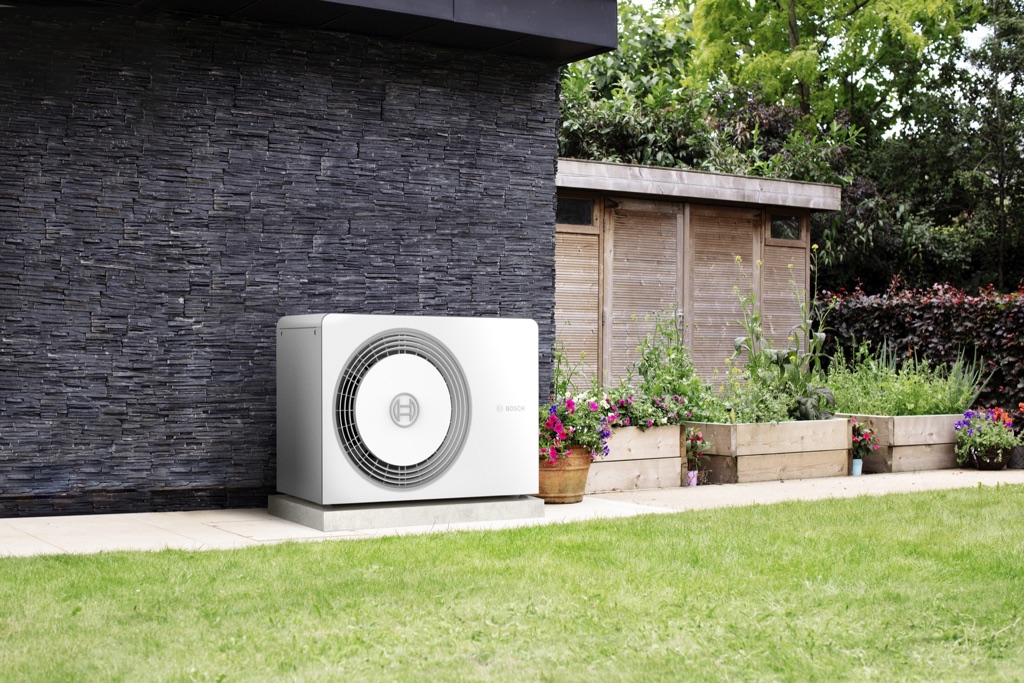
Are you planning to install a heat pump in a private home and want to use state support?
In 2026, Latvian households have access to EKII funding for the purchase and installation of renewable energy equipment, including heat pumps.
This programme is especially relevant for homeowners who want to replace their existing heating system with a more energy-efficient solution or supplement their current heating with a heat pump.
In this article we explain:
- who is eligible for state support for a heat pump;
- which residential houses can apply for funding;
- which heat pumps are eligible for support;
- how large the possible funding is;
- or whether support can be received if economic activity takes place in the house;
- to whom support is not granted;
- what documents are required;
- that must be observed for the next five years after receiving support.
How much is the state support for a heat pump?
Under the programme, the maximum available support for one project is 15 000 €, but the overall support intensity does not exceed 70% of eligible costs.
If the support recipient holds a Latvian Honorary Family Certificate, in certain cases the support intensity can reach 85%.
However, a very important nuance must be taken into account – 70% or 85% does not mean that the state will cover the respective percentage of the entire purchase price for any heat pump. The programme also provides for a maximum support amount for a specific heat pump type and capacity.
For example, in the 2026 regulations the maximum support is:
- ground-to-water / water-to-water etc. heat pump with loop installation – up to 13 000 € depending on capacity;
- for an air-to-water heat pump – up to 4 700 €;
- for an air-to-air heat pump – up to 2 400 €.
Therefore, when planning a heating system, it is important to calculate not only the price of the heat pump, but also what state support applies to the specific unit.
Which heat pumps are eligible for state support?
The state support programme provides funding for the installation of certain heat pumps or replacement of the heating system if the programme conditions are met. Eligible heat pumps are those that obtain heat energy from air, ground or water, and the total installed capacity of the equipment does not exceed the limit set in the programme.
Air-to-water heat pump
An air-to-water heat pump uses thermal energy from outdoor air and transfers it to the building’s water heating system. It can be suitable for private houses where heating is provided by radiators or underfloor heating.
Such a system can provide not only building heating, but also domestic hot water preparation, if the particular solution is designed for it. When choosing a unit, it is essential to take into account the building’s heat losses, the required heating capacity and the parameters of the existing heating system.
Air-to-air heat pump
An air-to-air heat pump extracts thermal energy from outdoor air and delivers it directly to the room air. Such a solution can be suitable for buildings and rooms where a water-based heating system is not required.
The advantage of an air-to-air system is relatively simple installation; however, its suitability for a particular home depends on the building layout, number of rooms, thermal insulation and the required heating comfort.
Ground-to-water heat pump
A ground-to-water heat pump uses heat energy stored in the ground, obtained with a horizontally installed ground collector or vertical geothermal boreholes. The system can provide building heating and domestic hot water preparation, and with an appropriate system also cooling.
For a ground-to-water solution, the plot’s possibilities must be assessed. Installing a horizontal collector requires sufficient free land area, while a vertical collector requires appropriate boreholes. Therefore, installing such a heat pump usually requires more careful technical design.
How to choose a heat pump?
Regardless of the heat pump type, the unit should not be chosen only by price, the capacity stated in advertising or the available amount of state support. The heat pump’s capacity and technical parameters must be suitable for the specific building.
Before making a choice, it is advisable to assess the building’s heat losses, the existing heating system, the required heating capacity, hot water consumption and the technical possibilities of the specific property. This helps select an appropriate heat pump and create a heating system suited to the building’s actual needs. Read more about this in the article How to choose a heat pump for a private house.
Which homeowners can apply for state support?
Support is intended for specific categories of residential buildings.
Within the programme, the following may be supported:
- single-family private houses;
- two-apartment houses;
- semi-detached and terraced houses;
- apartment buildings;
- certain garden houses;
- summer houses;
- certain other residential buildings specified in the terms.
An important condition – the residential building must match the building classification specified in the regulations.
For a natural person, ownership rights to the residential house must be registered in the Land Register.
If the house has several owners, the consent of the other owners is required to implement the project. Consent must be notarised or signed with a secure electronic signature that includes a timestamp.
Who can be a project applicant?
Within the programme, the project applicant may be:
- a natural person who is a permanent resident of the Republic of Latvia and who has ownership rights to the relevant residential house registered in the Land Register;
- association of apartment owners in a multi-apartment building;
- an association or foundation registered in Latvia that has ownership rights to the relevant residential house recorded in the Land Register;
- A religious organization registered in Latvia that owns the respective residential house.
In the case of a private house, the typical situation is simple – the project applicant is the homeowner.
When is state support not granted?
Not every homeowner automatically qualifies for support.
According to the current rules, you cannot apply for support if, for example:
- the project applicant or the respective homeowner has tax debts exceeding 150 €;
- insolvency proceedings have been declared for the person;
- international or national sanctions have been imposed on the person;
- a person has in certain cases been found guilty of certain criminal offences;
- the person is registered as a debtor in the Maintenance Guarantee Fund register;
- the specific activity has already been funded under another support programme;
- the remaining programme requirements regarding the property, equipment or project documentation have not been met.
Likewise, it is not possible to receive double funding for the same eligible costs.
What to do if economic activity takes place at the house address?
This is a very important question, because engaging in economic activity in itself does not automatically mean that support is unavailable.
If a company or sole trader is registered at the property, you must first determine whether economic activity is actually carried out on that property and whether the project result is used to support that activity.
If the heat pump or other project result is used in economic activity, the support may be qualified as de minimis business support.
In such a case, the de minimis regulation must be taken into account, including previously received de minimis aid.
An important nuance: registration of a company, association or foundation’s legal address at the house alone is not considered to constitute economic activity if no economic activity related to that entity actually takes place in the house.
What to do in practice?
If a company is registered at your home or economic activity takes place there, before purchasing a heat pump it is advisable to check this matter with the project preparer and, if necessary, complete de minimis documentation.
This helps avoid a situation where a project is initially prepared as an ordinary household project, but later it is found that commercial activity support conditions apply to it.
What documents are required to receive support?
During the application process, documents confirming both the equipment purchase and its installation must be prepared.
Depending on the specific project, the following may be required:
- project application;
- acceptance–handover certificate;
- document on equipment purchase and payment;
- an invoice or other payment confirmation document;
- technical information about the equipment;
- photo documentation before and after project implementation;
- documents on previous energy resource consumption;
- a document on disconnection from natural gas use for heating, if applicable;
- consent of co-owners if the property has multiple owners;
- de minimis documentation, if commercial activity support applies to the project;
- other documents according to the specific activity.
Especially important is the acceptance–handover certificate prepared by the equipment installer. It must include information about the work completed, the parameters of the installed equipment, commissioning and the necessary instruction.
That is why it is important to choose an installer who understands not only the technical installation of heat pumps, but also the documentation requirements.
What happens after receiving support?
5-year obligations
Receiving state support does not mean that after the money is received the project is fully closed.
For at least five years after signing the project agreement, the support recipient must comply with the programme conditions.
This means that:
1. The heat pump must remain in operation
The equipment included in the project must be operated and retained as an integral part of the property.
2. The house must not simply be converted to another use
Over a five-year period the house must not change its use and must not be dismantled.
3. In the event of a house sale, obligations transfer to the new owner
If the house is sold, the project’s obligations must be assumed by the new owner. If this is not ensured, an obligation to repay the support received may arise.
4. Monitoring must be ensured
Each year the support recipient must carry out project monitoring. The monitoring report states the data on energy produced and consumed in line with the specific project.
5. Be prepared for an inspection
The Environmental Investment Fund has the right to inspect the project implementation site and the information provided in the project. The rules provide for the possibility of inspection for up to 66 months after the project decision is made, so it is important to keep the documentation related to the project.
What documents will need to be submitted over the next five years?
For a heat pump project, it is not required to submit the full original set of documents again every year.
The main obligation is to carry out the required annual monitoring and submit the monitoring report by the specified deadline.
At the same time, the owner must be able to present project-related documents upon request and ensure access to the project implementation site.
That is why we recommend keeping in one place:
- a copy of the project application;
- project contract;
- the heat pump bill;
- payment documents;
- acceptance–handover certificate;
- equipment technical documentation;
- warranty documents;
- installation photographs;
- monitoring reports;
- other project-related documents.
This will make the situation much easier if, after several years, the Environmental Investment Fund requests additional information or carries out a project audit.
How long must monitoring reports be submitted?
Monitoring must be carried out every year.
Current regulations provide that the monitoring report for the respective 12-month period must be submitted by 1 May of the following year.
The Environmental Investment Fund indicates that monitoring information is submitted in the electronic project monitoring system (EMSI).
This means that after the heat pump is installed, project obligations continue – for five years it is necessary to comply with the programme conditions and carry out the required monitoring.
May a heat pump be sold together with the house?
Yes, the house can be alienated, but it is important to ensure takeover of the project’s obligations.
If the house is sold, the new owner must assume the obligations set out in the project agreement.
Therefore, when selling a property within the five-year period, the received state support and related obligations must also be taken into account.
Why should choosing a heat pump be entrusted to professionals?
State support makes purchasing a heat pump more affordable, but receiving funding alone is not enough.
It is important to choose the right equipment and ensure quality installation.
Before choosing a heat pump, we recommend assessing:
- the total area of the house;
- building insulation;
- heat loss;
- the existing heating system;
- radiator or underfloor heating system;
- the required heating capacity;
- hot water consumption;
- electricity connection;
- the existing heating boiler;
- the option to create a hybrid system, if it is suitable for the particular property.
A correctly sized heat pump is just as important as its quality installation. Also get to know our heat pump offering.
We help with heat pump selection and installation
If you are considering using state support for a heat pump, you do not need to try to research the entire process on your own.
We can help assess your home’s heating system, determine the most suitable heat pump type and capacity, and carry out professional equipment installation.
Our goal is to provide not only a quality-installed heat pump, but also to help the client understand which conditions must be met for the project to comply with state support requirements.
Would you like to know which heat pump is suitable for your home?
Contact us, tell us about your home and existing heating system – we will help you understand which solution would suit you, and also help you prepare the documentation for state support.
In conclusion
A heat pump with state support in 2026 is an opportunity to reduce the initial investment in modernising a heating system, but before purchasing the equipment it is important to make sure that the house, the project applicant and the chosen equipment all meet the current requirements.
If you plan to install a heat pump, we will help you choose a suitable solution and carry out quality installation.
Let's live green!
Official sources: